All Categories
Featured
Table of Contents
- – Modern Accountability for Digital Marketing Fo...
- – Deciphering Attribution Models in 2026
- – Benchmarks for Spend Validation in Southern Ca...
- – Privacy-Compliant Data Collection in 2026
- – Overcoming the Challenges of Incremental Lift
- – The Role of Machine Learning in Predictive Spend
- – Future-Proofing Your Marketing Strategy
Modern Accountability for Digital Marketing For Optometry And Eye Care Practices Budgets
Marketing departments in 2026 face a level of scrutiny that would have seemed impossible just a few years ago. As the average cost per acquisition in the United States has climbed by nearly 14% since 2024, the demand for precision in spend validation has reached a fever pitch. In regions like Ontario and Fontana, where local competition for consumer attention is fierce, businesses can no longer afford to rely on the "last-click" attribution models of the past. These outdated methods give 100% of the credit to the final ad a user clicked before purchasing, ignoring the complex series of interactions that actually drove the decision.
Multi-touch attribution (MTA) has emerged as the standard for validating spend because it assigns fractional credit to every touchpoint. A consumer in Chino Hills might see a social media display ad on Tuesday, receive an email on Thursday, and finally click a search link on Saturday. Last-click models would credit only the search link, leading marketers to over-invest in search while starving the social and email channels that did the heavy lifting. By 2026, the shift toward more granular data has made it possible to see exactly how these channels interact to produce a sale.
Measuring the efficacy of Digital Marketing For Optometry And Eye Care Practices requires a move away from gut feelings and toward mathematical weightings. High-growth firms now use algorithmic models that weigh touchpoints based on their influence on the conversion path. This ensures that the budget is allocated to the specific sequence of ads that most effectively moves a prospect from awareness to action.
Deciphering Attribution Models in 2026
Not all attribution models are created equal. The choice of model dictates how a business perceives its return on investment. Linear attribution, for example, distributes credit equally across every interaction. While this is fairer than last-click, it often fails to account for the varying impact of different media types. A video ad that a user watched for 30 seconds in Rialto likely had more influence than a three-line text snippet seen in passing.
Time-decay models provide a more nuanced view by giving more weight to the interactions that occurred closest to the purchase. This is particularly useful for short sales cycles common in Chino. However, for high-ticket items or services with long consideration periods, U-shaped or "Position-Based" models are often preferred. These models give 40% of the credit to the first touch and 40% to the last, with the remaining 20% distributed among the middle interactions. This recognizes the importance of both the initial discovery and the final push.
Market data from the first half of 2026 shows that companies using position-based models report a 22% higher level of confidence in their budget forecasts compared to those using single-touch methods. This confidence stems from the ability to identify "assist" channels—the platforms that never get the final click but are present in 80% of successful conversion paths. Without this visibility, marketers often cut these "low-performing" channels, only to see their total sales drop inexplicably weeks later.

Benchmarks for Spend Validation in Southern California
Performance benchmarks vary significantly by geography and industry. In the Inland Empire, specifically in areas like Montclair and Brea, the digital space is crowded. For Digital Marketing For Optometry And Eye Care Practices, a healthy Return on Ad Spend (ROAS) in 2026 typically sits between 4:1 and 6:1. However, those using advanced MTA often find that their "true" ROAS is higher than previously thought because they can finally track offline conversions driven by online ads.
Current industry standards suggest that a successful campaign should maintain a customer acquisition cost (CAC) that is at least three times lower than the lifetime value (LTV) of that customer. Multi-touch attribution makes it easier to calculate this ratio by tying specific ad spend to individual customer profiles over time. When a business understands that a lead from a specific Digital Marketing For Optometry And Eye Care Practices has a 50% higher LTV, they can justify a higher initial spend to acquire that lead.
The integration of Online Website Marketing Vision has helped many firms bridge the gap between digital impressions and physical foot traffic. In cities like Fontana, where brick-and-mortar presence remains a major factor, being able to attribute a store visit to a specific mobile ad viewed three days prior is the "holy grail" of spend validation.
Privacy-Compliant Data Collection in 2026
The shift toward MTA has happened alongside a massive overhaul of privacy regulations in the United States. With the deprecation of third-party cookies now a distant memory, 2026 attribution relies heavily on first-party data and server-side tracking. Marketers must now collect data directly from their interactions with consumers rather than buying it from third-party aggregators.
This "privacy-first" environment has actually improved the quality of attribution data. Because businesses must now ask for permission or provide value in exchange for data, the information they gather is more accurate and comes from more engaged prospects. Success in Online Website Marketing Eye Care SEO now depends on the ability to unify these data points into a single "source of truth."
Identity resolution technology has become the backbone of this process. It allows a brand to recognize that the person browsing on a tablet in Rialto is the same person who later buys on a laptop in Ontario. By stitching these sessions together, the MTA model can build a complete map of the consumer's path. This level of detail is necessary to prove that marketing spend is not just reaching "people," but specifically reaching the right people at the right time.
Overcoming the Challenges of Incremental Lift
One of the biggest questions in marketing validation is "incrementality." Would the customer have bought the product anyway, even without seeing the ad? Multi-touch attribution helps answer this by allowing for "hold-out" testing. By showing ads to one group in Chino Hills and withholding them from a similar group in Montclair, marketers can measure the true lift generated by their spend.
Statistical significance is the key here. In 2026, data scientists use Bayesian modeling to determine the probability that a specific increase in sales was caused by a specific campaign. This moves the conversation away from "we think this worked" to "there is a 95% probability that this spend generated this much revenue." This level of certainty is what CFOs demand when approving multi-million dollar budgets for Digital Marketing For Optometry And Eye Care Practices.
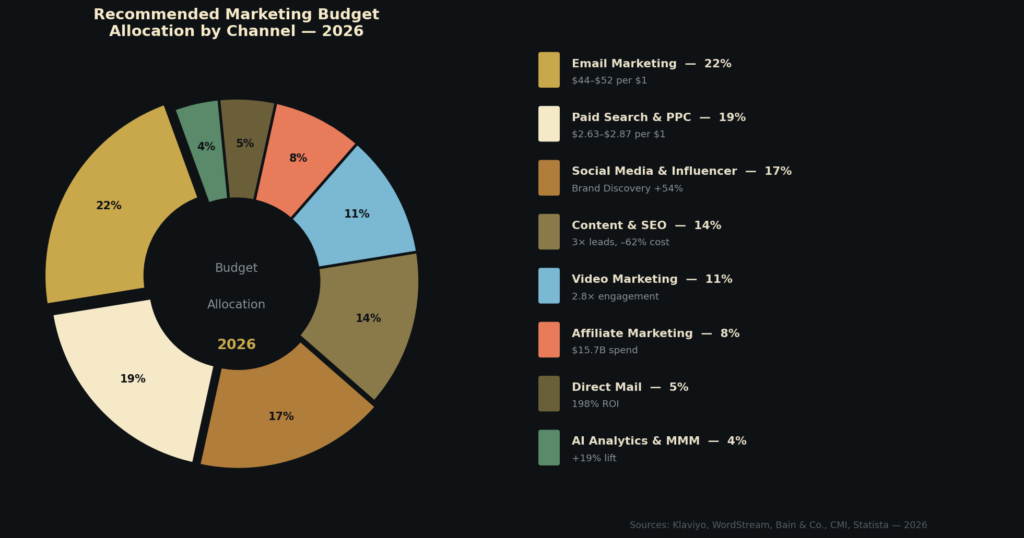
Furthermore, the rise of Online Website Marketing for Practices has simplified the way smaller businesses handle complex data. Automated platforms now handle the heavy lifting of data cleaning and model selection, making MTA accessible to firms that don't have a dedicated data science team. This democratization of data ensures that even a local service provider in Brea can validate their spend with the same rigor as a national corporation.
The Role of Machine Learning in Predictive Spend
As we move through 2026, attribution is shifting from a reactive tool to a predictive one. It is no longer enough to know what happened last month; marketers want to know what will happen if they shift 20% of their budget from search to video next month. Machine learning models trained on years of attribution data can now simulate these scenarios with high accuracy.
These simulations take into account external factors like local economic shifts in the Inland Empire, seasonal trends, and even competitor activity. For instance, if a major competitor increases their spend in Ontario, a predictive model can suggest how much a brand needs to increase its own spend to maintain its share of voice. This proactive approach to spend validation ensures that budgets are always optimized for the current market reality rather than yesterday's data.
The most successful brands are those that treat attribution as a continuous loop of testing, learning, and refining. They don't just set a model and forget it. They constantly challenge their assumptions by running small experiments across different channels. This culture of experimentation, backed by the hard data of multi-touch attribution, is what separates market leaders from those who are simply throwing money at the wall to see what sticks.
Future-Proofing Your Marketing Strategy
Validating spend through multi-touch attribution is not a one-time project but a fundamental shift in how business is conducted. The complexity of the modern consumer path requires a matching complexity in measurement. As 2026 progresses, the gap between companies that use data to drive decisions and those that rely on intuition will only widen.
For businesses operating in the competitive corridors of Southern California, the stakes are high. Every dollar spent on an ineffective ad is a dollar that a competitor is using to capture market share. By implementing a clear attribution strategy, marketing leaders can move from a defensive position—trying to justify their existence—to an offensive one, where they can confidently point to the specific drivers of growth.
The move toward more transparent, data-backed marketing solutions is a net positive for the industry. It forces a focus on quality and relevance, as ads that don't contribute to the conversion path are quickly identified and eliminated. In this environment, the most effective marketing is not necessarily the one with the biggest budget, but the one with the best understanding of its own data. Establishing this understanding is the only way to ensure that marketing spend remains a predictable investment rather than a speculative expense.

Table of Contents
- – Modern Accountability for Digital Marketing Fo...
- – Deciphering Attribution Models in 2026
- – Benchmarks for Spend Validation in Southern Ca...
- – Privacy-Compliant Data Collection in 2026
- – Overcoming the Challenges of Incremental Lift
- – The Role of Machine Learning in Predictive Spend
- – Future-Proofing Your Marketing Strategy
Latest Posts
Analyzing Sector Growth Shifts across the United States
Conducting Comprehensive Competitor Analysis for Local Success
Identifying Economic Segments for 2026
Latest Posts
Analyzing Sector Growth Shifts across the United States
Conducting Comprehensive Competitor Analysis for Local Success
Identifying Economic Segments for 2026